
Bantam chicken coop
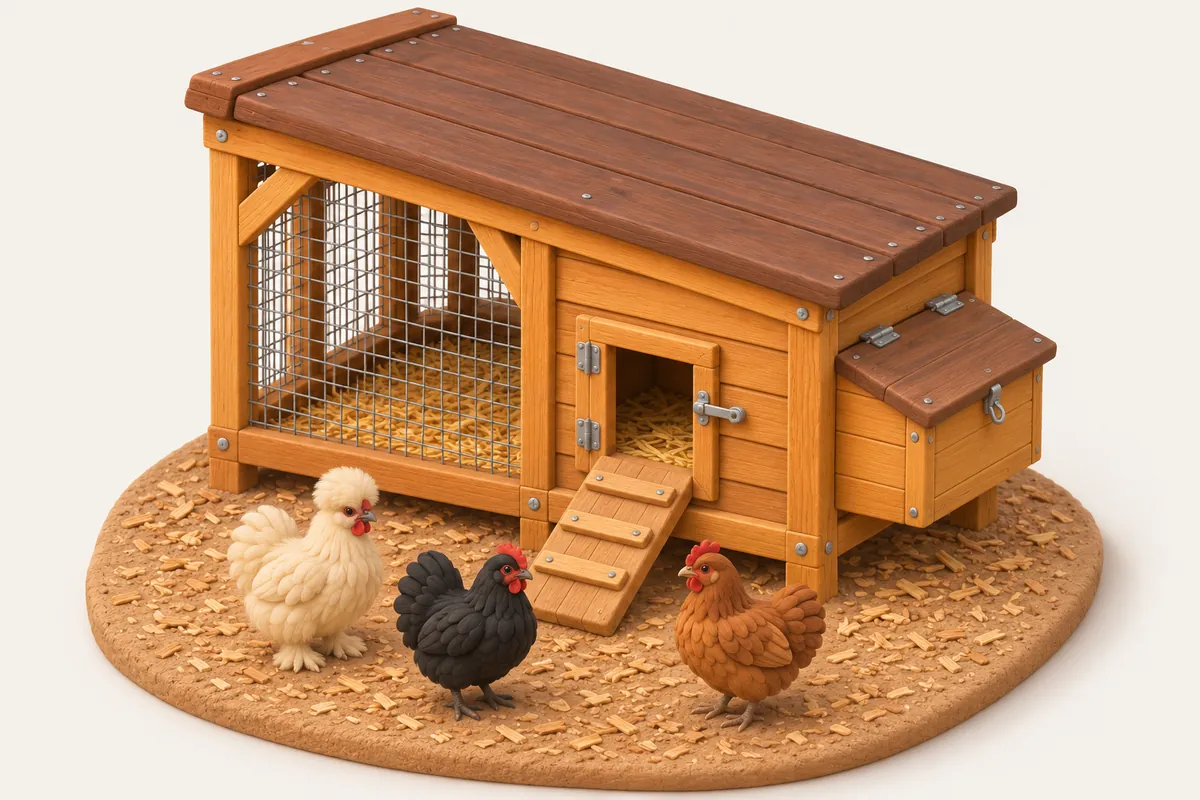
6 bantams with a daily run: a 3 × 4 ft coop and a 6 × 8 ft run.
 Coop3 × 4 ft
 Run6 × 8 ft
 Roost2.5 ft
 Nest boxes2
Silkies and other bantams that cannot fly up need low, easy-to-reach roosts. Penn State Extension gives bantam roost heights of 12–18 in, while Oregon State Extension says silkie roosting poles should be only 1 foot off the ground.
Bantam space rules, with sources
| Part | Minimum | Recommended | Rule |
|---|---|---|---|
| Coop floor per bantam, with a daily run | 1 sq ft | 2 sq ft | Sources: Penn State Extension; Virginia Cooperative Extension |
Virginia Tech gives 2-3 sq ft for bantams | |||
| Coop floor per bantam, kept inside | 8 sq ft | 10 sq ft | Sources: Oregon State University Extension |
Oregon State gives one figure for all birds kept in | |||
| Run per bantam | 4 sq ft | 8 sq ft | Sources: Penn State Extension; Virginia Cooperative Extension |
Virginia Tech gives 5-8 sq ft for bantams | |||
| Roost per bantam | 4 in | 5 in | Sources: Penn State Extension; Oregon State University Extension |
Oregon State: 5-10 in per bird | |||
| Roost height above the floor | 12 in | 18 in | Sources: Penn State Extension |
Penn State: bantams 12-18 in; Oregon State: silkies 1 ft | |||
| Nest boxes | 1 per 5 hens | 1 per 4 hens | Sources: Oregon State University Extension; Utah State University Extension |
Box 12 × 12 × 12 in. | |||
Coop and run by number of bantams
All plans share one scale.
| Bantams | Coop | Run | Roost | Nests |
|---|---|---|---|---|
| 2 | 2 × 4 ft | 4 × 6 ft | 0.8 ft | 1 |
| 4 | 2 × 4 ft | 4 × 8 ft | 1.7 ft | 1 |
| 6 | 3 × 4 ft | 6 × 8 ft | 2.5 ft | 2 |
| 8 | 4 × 4 ft | 8 × 10 ft | 3.3 ft | 2 |
| 10 | 4 × 5 ft | 8 × 10 ft | 4.2 ft | 3 |
| 12 | 4 × 6 ft | 8 × 12 ft | 5 ft | 3 |
Plans for 2 to 12 bantams
All plans share one scale.
2 bantams
- Coop
- 2 × 4 ft
- Run
- 4 × 6 ft
- Roost
- 0.8 ft
- Nest boxes
- 1
4 bantams
- Coop
- 2 × 4 ft
- Run
- 4 × 8 ft
- Roost
- 1.7 ft
- Nest boxes
- 1
6 bantams
- Coop
- 3 × 4 ft
- Run
- 6 × 8 ft
- Roost
- 2.5 ft
- Nest boxes
- 2
8 bantams
- Coop
- 4 × 4 ft
- Run
- 8 × 10 ft
- Roost
- 3.3 ft
- Nest boxes
- 2
10 bantams
- Coop
- 4 × 5 ft
- Run
- 8 × 10 ft
- Roost
- 4.2 ft
- Nest boxes
- 3
12 bantams
- Coop
- 4 × 6 ft
- Run
- 8 × 12 ft
- Roost
- 5 ft
- Nest boxes
- 3
Silkies and other bantams that cannot fly up
Some bantams, silkies above all, often cannot fly up to a high roost. Oregon State Extension suggests a roost about 1 ft off the floor for them, and Penn State gives 12 to 18 in for bantams in general. Keep the roost low and add a ramp or a step if your birds cannot reach it.
Sizes for small flocks
The smallest groups can share a compact coop: the plans for 2 and 4 bantams both use a 2 × 4 ft coop, with a larger run for the group of 4. For 6 birds, the coop grows to 3 × 4 ft and the run to 6 × 8 ft. Check the drawing and table together when choosing a footprint; the run gives birds room to move outside the coop.
Roosts and nests
Plan a stable roost with enough total length for every bird to settle without crowding. The table allows about 0.8 ft of roost for 2 bantams and 5 ft for 12. Nest boxes are shared: the plans allow 1 for smaller groups and add boxes as the flock grows. Keep nests easy to reach for egg collection, and make roost access gentle for silkies.
Bantams with standard hens
When bantams share space with standard hens, plan around the larger birds. They need more room and can take up the best roost or feeder space, leaving smaller birds pushed aside. Size the coop, run, and roost for the standard hens’ needs, then watch whether the bantams can reach food, water, nests, and safe resting places. Separate feeding or a protected low roost can help if access becomes a problem.
Questions
Can bantams use the same coop as standard hens?
Yes, if the coop has enough room for the standard hens and the bantams can reach food, water, nests, and roosts. Watch for crowding or birds being pushed away, and adjust access if needed.
How high should a silkie roost be?
Oregon State Extension says silkie roosting poles should be only 1 foot off the ground. Penn State Extension gives bantam roost heights of 12–18 in, so keep a silkie’s perch low and easy to reach.
How many nest boxes do bantams need?
The plans allow 1 nest for groups of 2 or 4, 2 nests for groups of 6 or 8, and 3 nests for groups of 10 or 12. Keep boxes accessible and collect eggs regularly.