
Chicken coop guides
Each guide covers one part of the coop, from nest boxes and roosts to ventilation and predator proofing, with a calculator or diagram first and the sourced rules after.
Guides cover nest boxes, roosts, ventilation, run size, space per chicken, predator proofing, winter care, and coop layout. Choose a topic when you need to solve one building or care question, then use the related guidance to check how that choice affects the rest of your setup. For example, a six-hen plan needs room for roosting and nesting as well as floor space, so those details belong together.
All guides
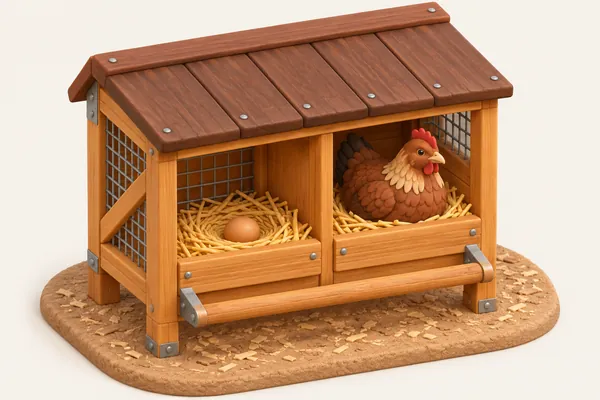
Nest boxes
How many boxes your hens need, how big, and how high.
6 hens: 2 nest boxes
Nest box calculator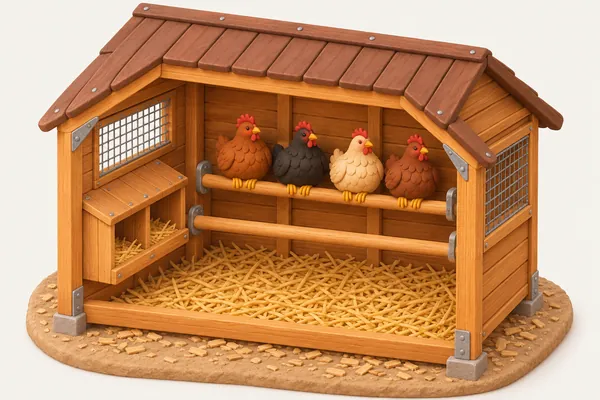
Roosts
Roost length, bars, height and spacing for your coop.
6 hens: 5 ft of roost
Roost calculator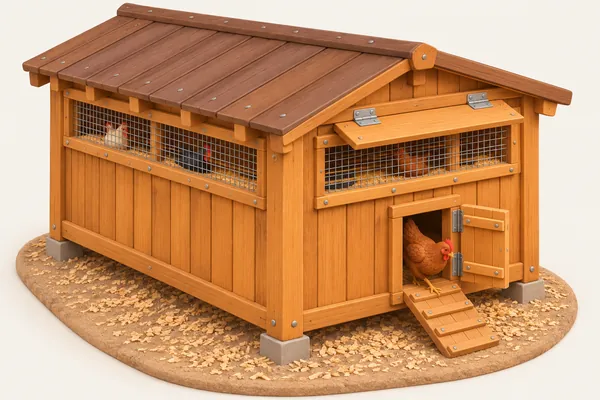
Ventilation
How much vent area a coop needs, and where it goes.
4 × 5 ft coop: about 2 sq ft of vent
Ventilation calculator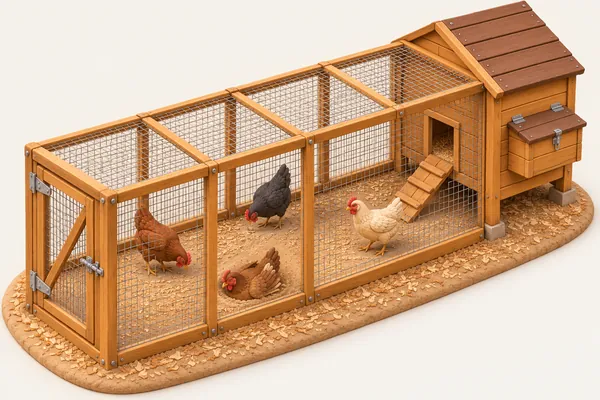
Run size
How much run your hens need, and common sizes that fit.
6 hens: 60 sq ft of run
Run size calculator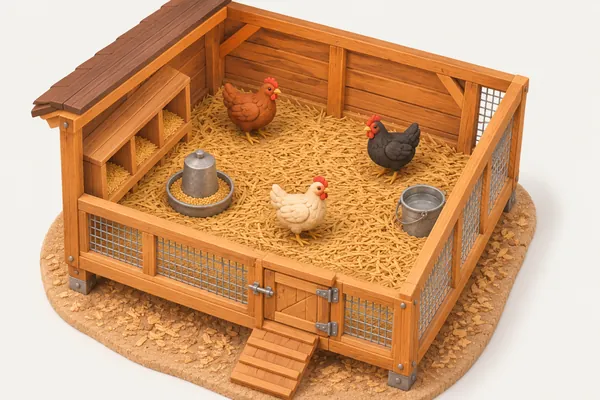
Space per chicken
Coop floor and run per bird, with every source’s figure.
3 sq ft of coop floor per hen with a run
Space per chicken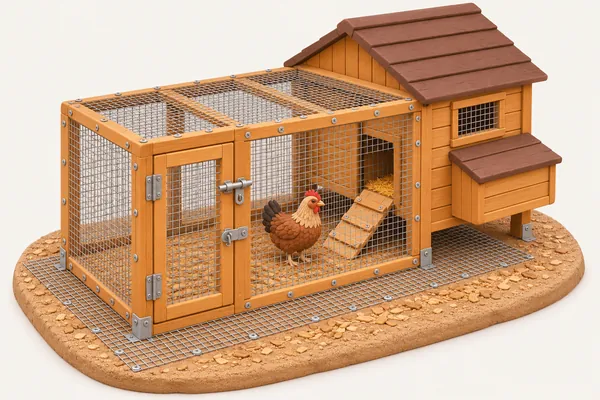
Predator proofing
Hardware cloth for the run, and what sources leave out.
Predator proofing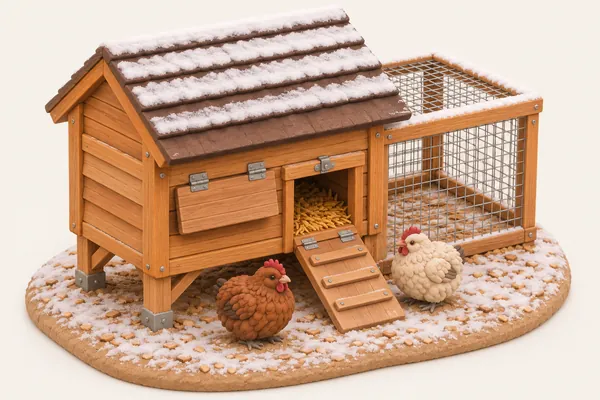
Winter coop
Fresh air without drafts: a diagram and a sourced checklist.
Winter coop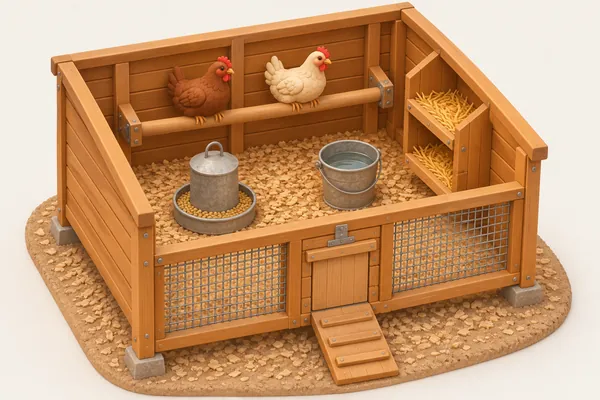
Coop layout
Where the roost, nests, feeder and waterer go, rule by rule.
Coop layout
Start with your build
If you are still choosing a footprint, begin with space per chicken and run size. For six standard hens that go out to a run every day, the example uses a 4 × 5 ft coop and a 6 × 10 ft run. Its coop floor gives 20 sq ft, above the 18 sq ft recommended total; the run gives 60 sq ft, matching the recommended total. Hens kept inside all day need a different plan, so use that guide before settling on dimensions.
Check the details
Use the focused guides once you know the space available. Roost and nest-box placement affect how hens use the coop: the six-hen example allows 60 in of roost and two 12 × 12 × 12 in nest boxes. Penn State Extension calls for three nests for six hens, while other guidance in the example supports two, so plan around the guidance you choose. Ventilation and predator proofing also deserve attention before you build, especially where openings meet the roost or run.
Questions
Which guide should I read first?
Start with space per chicken if you are choosing a coop footprint. If the coop is already built, choose the guide that matches your immediate question, such as ventilation, roosts, or nest boxes.
Do I need to read every guide?
No. Pick the topics tied to your design and daily care. Run size, predator proofing, and winter care can matter even when the coop itself is already planned.
Why do some recommendations differ?
Extension services do not always use the same guidance. Nest-box recommendations differ in the six-hen example: Penn State Extension asks for three, while other guidance supports two. Check the relevant guide and decide which recommendation fits your setup.