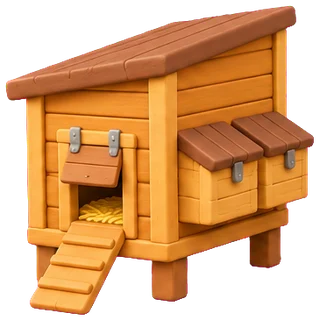
Chicken coop sizes
A coop for 2 standard hens is 2 × 4 ft; one for 50 is 10 × 16 ft.
Flock size
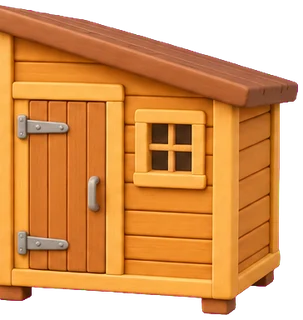 Coop4 × 5 ft
 Run6 × 10 ft
 Roost5 ft
 Nest boxes2
Coop size by number of chickens
12 flock sizes. Standard, run every day. Every plan is drawn at one scale.
2 chickens
- Coop
- 2 × 4 ft
- Run
- 4 × 6 ft
- Roost
- 1.7 ft
- Nest boxes
- 1
3 chickens
- Coop
- 3 × 4 ft
- Run
- 4 × 8 ft
- Roost
- 2.5 ft
- Nest boxes
- 1
4 chickens
- Coop
- 3 × 4 ft
- Run
- 6 × 8 ft
- Roost
- 3.3 ft
- Nest boxes
- 1
5 chickens
- Coop
- 4 × 4 ft
- Run
- 6 × 10 ft
- Roost
- 4.2 ft
- Nest boxes
- 2
6 chickens
- Coop
- 4 × 5 ft
- Run
- 6 × 10 ft
- Roost
- 5 ft
- Nest boxes
- 2
8 chickens
- Coop
- 4 × 6 ft
- Run
- 8 × 10 ft
- Roost
- 6.7 ft
- Nest boxes
- 2
10 chickens
- Coop
- 4 × 8 ft
- Run
- 10 × 12 ft
- Roost
- 8.3 ft
- Nest boxes
- 3
12 chickens
- Coop
- 6 × 6 ft
- Run
- 10 × 12 ft
- Roost
- 10 ft
- Nest boxes
- 3
15 chickens
- Coop
- 6 × 8 ft
- Run
- 10 × 15 ft
- Roost
- 12.5 ft
- Nest boxes
- 4
20 chickens
- Coop
- 8 × 8 ft
- Run
- 10 × 20 ft
- Roost
- 16.7 ft
- Nest boxes
- 5
30 chickens
- Coop
- 8 × 12 ft
- Run
- 15 × 20 ft
- Roost
- 25 ft
- Nest boxes
- 8
50 chickens
- Coop
- 10 × 16 ft
- Run
- 20 × 25 ft
- Roost
- 41.7 ft
- Nest boxes
- 13
How many chickens fit in a coop you already have
Birds a coop holds by its floor (standard birds, recommended space).
4 × 4 ft
- Floor
- 16 sq ft
- With a daily run
- 5 birds
- Kept inside
- 1 bird
4 × 6 ft
- Floor
- 24 sq ft
- With a daily run
- 8 birds
- Kept inside
- 2 birds
4 × 8 ft
- Floor
- 32 sq ft
- With a daily run
- 10 birds
- Kept inside
- 3 birds
6 × 6 ft
- Floor
- 36 sq ft
- With a daily run
- 12 birds
- Kept inside
- 3 birds
6 × 8 ft
- Floor
- 48 sq ft
- With a daily run
- 16 birds
- Kept inside
- 4 birds
8 × 8 ft
- Floor
- 64 sq ft
- With a daily run
- 21 birds
- Kept inside
- 6 birds
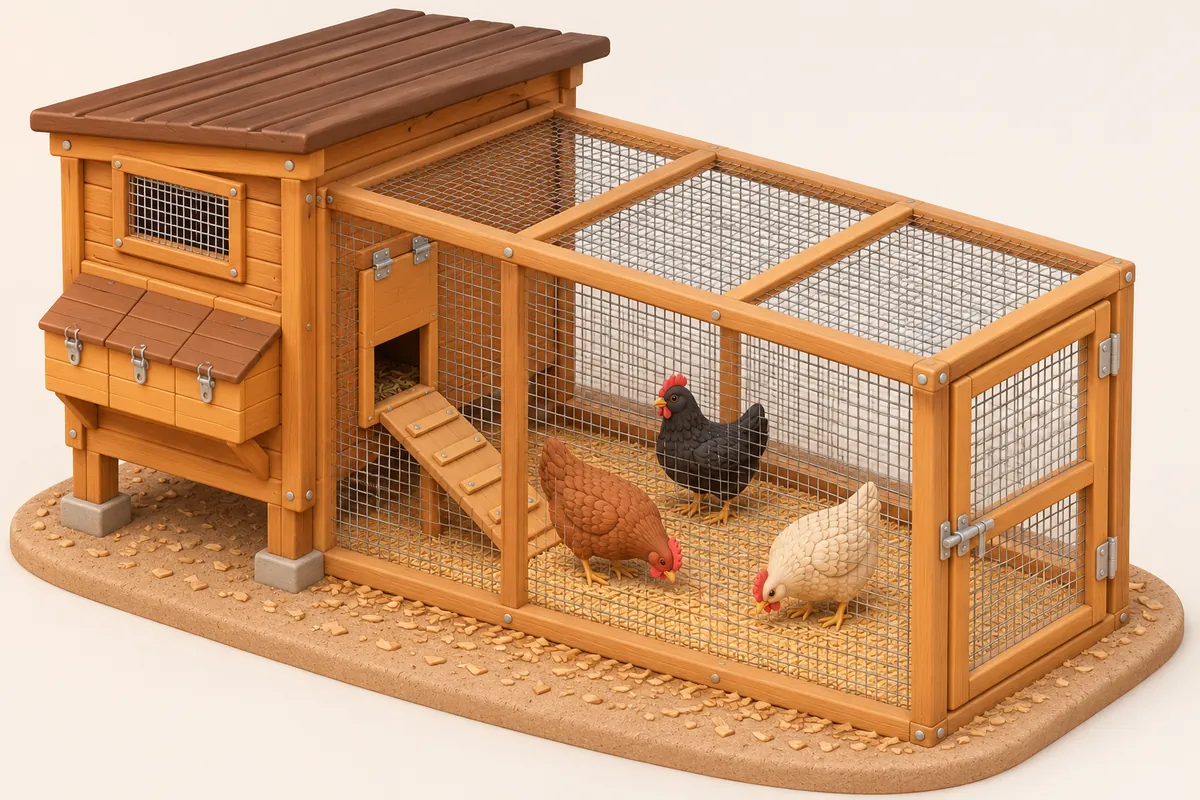
Move the slider to your flock. The coop and run are drawn to scale, and every tile below shares one scale, so you can compare them by eye.
Plan 3 sq ft of coop floor per standard hen when the hens go out to a run every day (Oregon State Extension), and 10 sq ft of run per hen (Virginia Cooperative Extension); hens kept in all day need 8 to 10 sq ft of floor each. The cards match flock sizes to coop and run dimensions, so start with the number of hens you expect to keep. If your birds are bantams or large breeds, compare their rates before choosing a design.
Choose your flock size
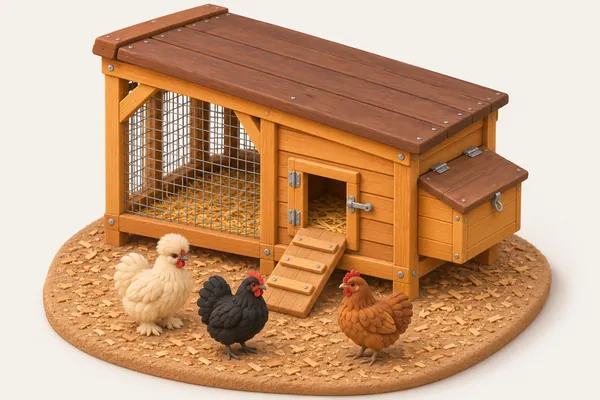
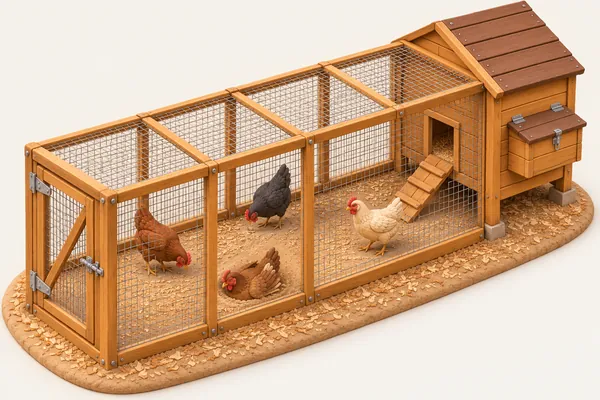
Pick the card closest to your expected flock, then check that its dimensions fit your yard and building space. The options range from 2 hens in a 2 × 4 ft coop with a 4 × 6 ft run to 50 hens in a 10 × 16 ft coop with a 20 × 25 ft run. If your flock falls between cards, use the per-hen rates to judge whether the nearest option gives enough room.
Match the rate to your birds
Breed and time spent indoors affect how much room to plan. For a standard hen, Penn State Extension’s minimum run rate is 1.5 sq ft per hen, while Oregon State Extension recommends 3 sq ft; their confined-housing guidance is 8 sq ft minimum and 10 sq ft recommended per hen. For larger breeds with a run, Penn State’s minimum coop floor is 2 sq ft per hen, while eXtension’s figure is up to 3.5 sq ft. Allow more room if hens will stay in the coop for long periods.
Questions
What if my flock size falls between two cards?
Compare the two nearest options and choose dimensions that meet the per-hen rate for your breed and housing. When you are unsure, planning for the larger flock gives you room to add hens without crowding.
Do bantams need the same run space as standard hens?
No. Penn State Extension gives bantams a minimum of 1 sq ft of run space per hen, while Virginia Cooperative Extension recommends 2 sq ft. The recommendations differ, so use the higher rate if you want more room.
Which rate should I use if my hens stay inside?
Oregon State Extension recommends 10 sq ft per hen for confined housing, with 8 sq ft as the minimum. Use the recommended rate when hens will spend most of their time indoors, and check that the coop dimensions provide that floor area.