
Chicken coop for 15 chickens
15 standard hens with a daily run: a 6 × 8 ft coop and a 10 × 15 ft run.
 Coop6 × 8 ft
 Run10 × 15 ft
 Roost12.5 ft
 Nest boxes4
Fifteen is the first flock that needs two feeders: one round feeder gives about 38 in of edge, and fifteen hens need 45 in at Penn State's 3 in per bird. The 6 × 8 ft walk-in leaves room for both, plus four boxes along one wall.
Side view: heights of roost, nests and doors
Spec for 15 hens, with sources
| Part | Minimum | Recommended | This plan | Rule |
|---|---|---|---|---|
| Coop floor | 22.5 sq ft | 45 sq ft | 48 sq ft (6 × 8 ft) | 1.5 sq ft per hen minimum, 3 recommended with a run Sources: Penn State Extension; Oregon State University Extension |
Sources range from 1.5 to 10 sq ft per hen; 8-10 if the hens never go out (Oregon State). | ||||
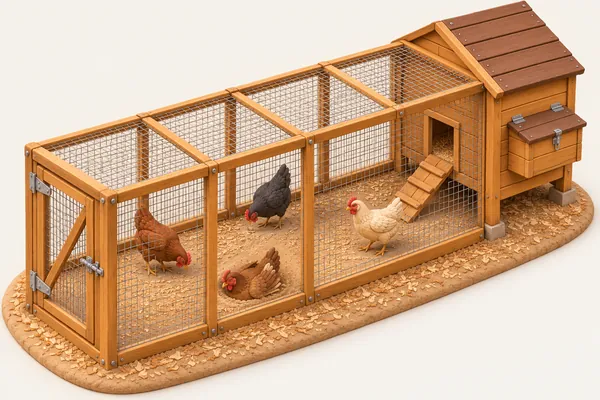
| Run | 120 sq ft | 150 sq ft | 150 sq ft (10 × 15 ft) | 8-10 sq ft per hen Sources: Penn State Extension; Virginia Cooperative Extension |
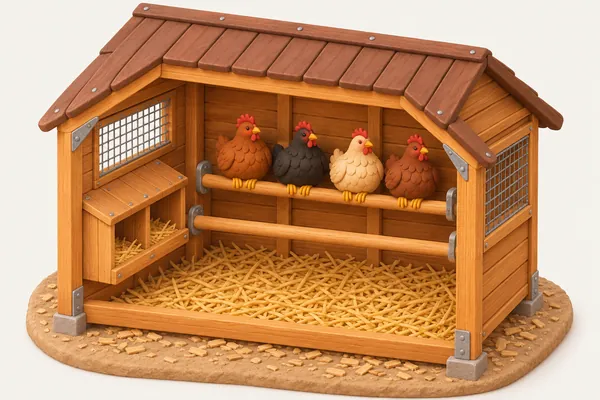
| Roost | 90 in | 150 in | 192 in, 2 bars 24 in high, the first 14 in from the back wall | 6-10 in per hen, 24 in high, at least 12 in from walls Sources: Penn State Extension; UC Davis School of Veterinary Medicine; Oregon State University Extension; University of Kentucky Cooperative Extension |
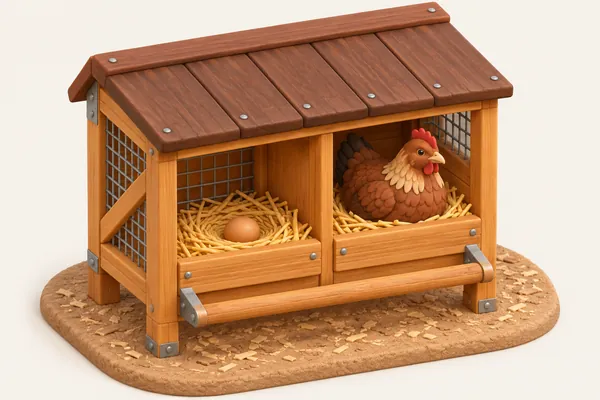
| Nest boxes | 3 | 4 | 4 boxes 12 × 12 × 12 in, 24 in high | 1 box per 4-5 hens, 12 × 12 × 12 in, floor at least 18 in and not lower than the roost Sources: Oregon State University Extension; Utah State University Extension; Penn State Extension |
Penn State asks for more: two nests for the first four hens, then one per four more (5 for 15 hens). | ||||
| Feeder | 45 in | 45 in | 2 round feeders 12 in across = 75.4 in of edge | 3 in of feeder edge per hen Sources: Penn State Extension |
| Water | 3 nipples | 3 nipples | bucket with 3 nipples | 1 nipple per 6-8 birds Sources: Penn State Extension |
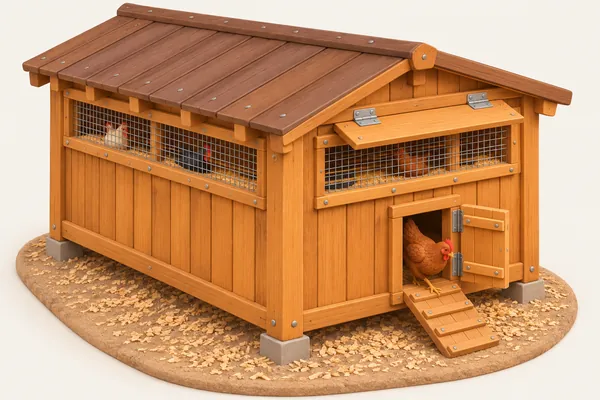
| Vent | 4.8 sq ft | 4.8 sq ft | 4.8 sq ft in strips on the front and back walls | about 1 sq ft per 10 sq ft of floor; never directly over the roost Sources: Common practice; Penn State Extension |
No extension service gives a vent area; the figure is common practice. Penn State: vents must not open over the perches. | ||||
Other birds, other days
The same 15 hens as bantams or large breeds, going out to a run or staying in. Each cell opens the planner on that case.
 Bantam
 Standard
 Large
What fits in common coop sizes
Standard hens at the recommended space, for the coop sizes around 15 hens.
Feeding fifteen
Hang the two feeders apart, one near each end of the shed, so the hens lowest in the pecking order can eat without being pushed off. The bucket carries three nipples for fifteen birds, inside Penn State's one nipple per six to eight. Two 96 in perches give 192 in against the 150 in this flock needs.
Collecting from four boxes
Four nest boxes on the right wall make a longer egg round; boxes hung outside with a hinged lid let you collect without walking in. Penn State would add a fifth box for this flock. The bedding under the two perches is the most heavily soiled strip of the floor, so clean it more often than the rest.
Build it
Plans that suit this flock
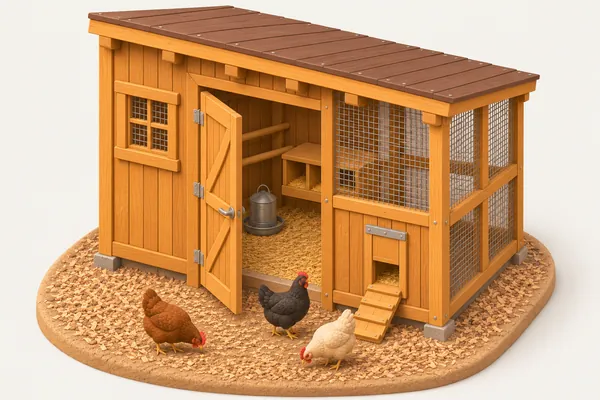 Walk-in coop
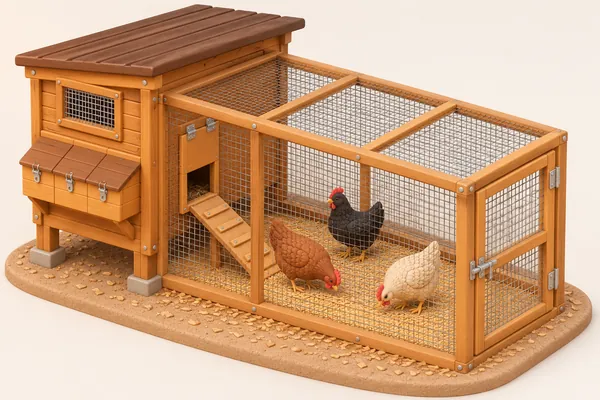 Coop with run
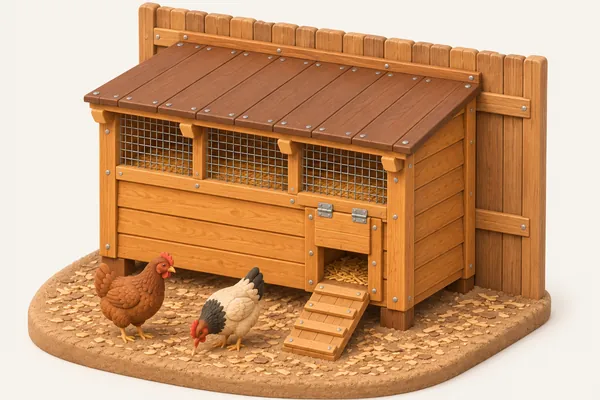 Lean-to coop
Parts of the coop, one by one
 Roosts
 Nest boxes
 Run size
 Ventilation
Questions
Is a 6 × 6 ft coop enough for fifteen?
No: it holds twelve at 3 sq ft each. Fifteen need 45 sq ft, and the 6 × 8 ft plan gives 48.