
Chicken coop for 2 chickens
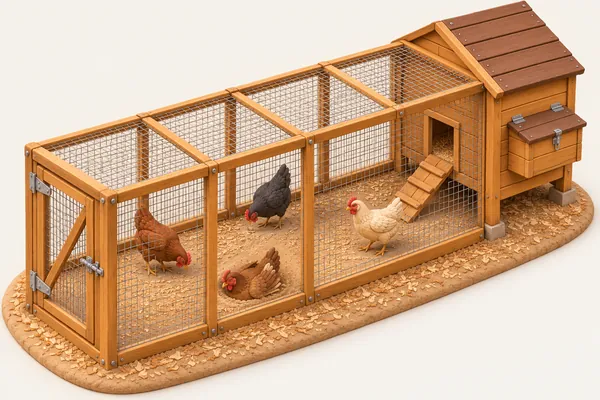
2 standard hens with a daily run: a 2 × 4 ft coop and a 4 × 6 ft run.
 Coop2 × 4 ft
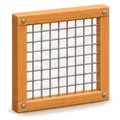 Run4 × 6 ft
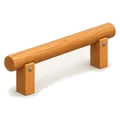 Roost1.7 ft
 Nest boxes1
A pair is the smallest flock most keepers start with, and almost anything sold as a starter coop is at least this big. The catch at this size is reach rather than room: a box this narrow is cleaned from outside through the 18 in hatch, so check that your arm gets to the back corner before you buy or build.
Side view: heights of roost, nests and doors
Spec for 2 hens, with sources
| Part | Minimum | Recommended | This plan | Rule |
|---|---|---|---|---|
| Coop floor | 3 sq ft | 6 sq ft | 8 sq ft (2 × 4 ft) | 1.5 sq ft per hen minimum, 3 recommended with a run Sources: Penn State Extension; Oregon State University Extension |
Sources range from 1.5 to 10 sq ft per hen; 8-10 if the hens never go out (Oregon State). | ||||
| Run | 16 sq ft | 20 sq ft | 24 sq ft (4 × 6 ft) | 8-10 sq ft per hen Sources: Penn State Extension; Virginia Cooperative Extension |
| Roost | 12 in | 20 in | 48 in, one bar 24 in high, 14 in from the back wall | 6-10 in per hen, 24 in high, at least 12 in from walls Sources: Penn State Extension; UC Davis School of Veterinary Medicine; Oregon State University Extension; University of Kentucky Cooperative Extension |
| Nest boxes | 1 | 1 | 1 box 12 × 12 × 12 in, 24 in high | 1 box per 4-5 hens, 12 × 12 × 12 in, floor at least 18 in and not lower than the roost Sources: Oregon State University Extension; Utah State University Extension; Penn State Extension |
Penn State asks for more: two nests for the first four hens, then one per four more (2 for 2 hens). | ||||
| Feeder | 6 in | 6 in | round feeder 12 in across = 37.7 in of edge | 3 in of feeder edge per hen Sources: Penn State Extension |
| Water | 1 nipple | 1 nipple | bucket with 2 nipples | 1 nipple per 6-8 birds Sources: Penn State Extension |
| Vent | 0.8 sq ft | 0.8 sq ft | 0.8 sq ft strip on the front wall | about 1 sq ft per 10 sq ft of floor; never directly over the roost Sources: Common practice; Penn State Extension |
No extension service gives a vent area; the figure is common practice. Penn State: vents must not open over the perches. | ||||
Other birds, other days
The same 2 hens as bantams or large breeds, going out to a run or staying in. Each cell opens the planner on that case.
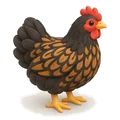 Bantam
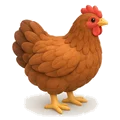 Standard
 Large
What fits in common coop sizes
Standard hens at the recommended space, for the coop sizes around 2 hens.
What a pair actually uses
Two birds share a single 48 in bar, far more perch than they need; the spare length helps, because hens rarely sit shoulder to shoulder all night. One box on the right wall is enough under Oregon State's guidance of a box for about four hens, though Penn State would hang a second even for a pair. Once the perch and the box are in, the round feeder and the bucket take most of the open floor.
Looking after a two-hen box
With one feeder, one bucket on a single nipple and one nest, the daily round is short: top up, collect the egg, glance at the droppings under the perch. Change the bedding through the hatch once a week. Because the floor stands 18 in up, a garden kneeler or a low step makes that job kinder on your back.
Build it
Plans that suit this flock
 Raised coop
 Coop with run
 Chicken tractor
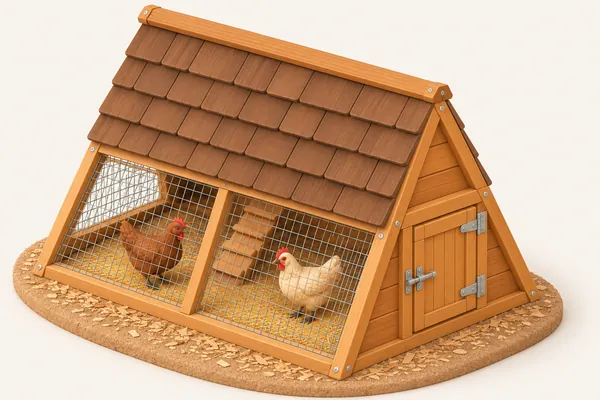 A-frame coop
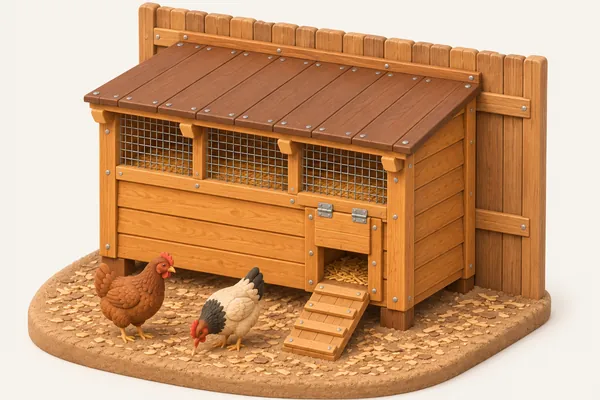 Lean-to coop
Parts of the coop, one by one
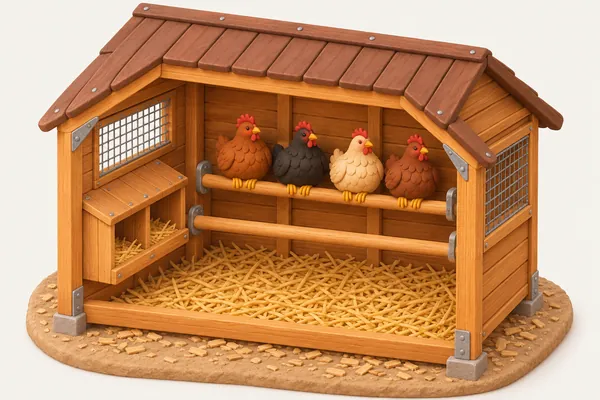 Roosts
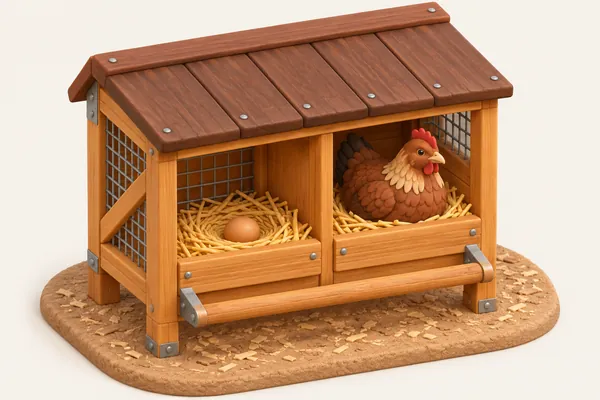 Nest boxes
 Run size
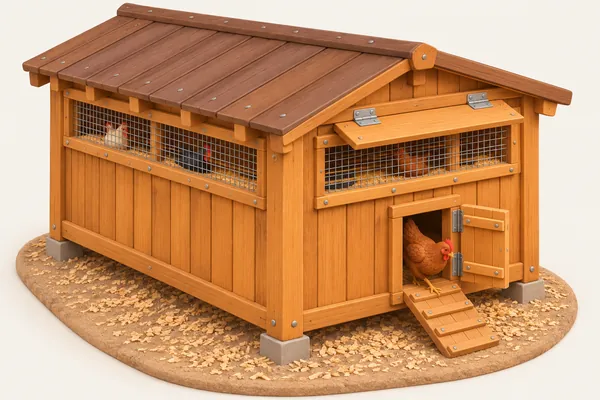 Ventilation
Questions
Can a third hen join a 2 × 4 ft coop later?
Only just: three standard hens need 9 sq ft at the recommended 3 sq ft each, and this floor has 8. If a third bird is likely, start with the 3 × 4 ft coop planned for three hens.