
How many chickens fit in a 4 × 6 ft coop
A 4 × 6 ft coop (24 sq ft) holds 8 standard hens with a daily run, or 2 kept inside all day.
 Standard hens8
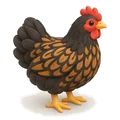 Bantams12
 Large breeds6
- Standard, kept inside2
A 4 × 6 ft coop has 24 sq ft of floor, so its practical limit comes from indoor space, even when hens spend the day outside. Eight standard hens need 80 sq ft of run at the recommended rate. The run adds outdoor room, but does not change the coop's footprint.
Hens a 4 × 6 ft coop holds
Each number is how many hens fit. Recommended space per hen gives comfortable hens; the minimum is the least an extension service accepts, so more hens fit at the minimum than at the recommended space. Both come from the same floor and roost rules the planner uses.
| Bird size | With a daily run | Kept inside | ||
|---|---|---|---|---|
| Hens at recommended spaceAt rec. space | Most hens at minimum spaceAt min. space | Hens at recommended spaceAt rec. space | Most hens at minimum spaceAt min. space | |
| Bantam | 12 | 24 | 2 | 3 |
| Standard | 8 | 16 | 2 | 3 |
| Large | 6 | 12 | 2 | 3 |
The minimum rate is Penn State's 1.5 sq ft per hen with a run and Oregon State's 8 sq ft per hen kept inside. At those rates this coop holds up to 16 standard hens with a run, or 3 kept inside. In this coop the floor sets the count.
Plans that fit this footprint
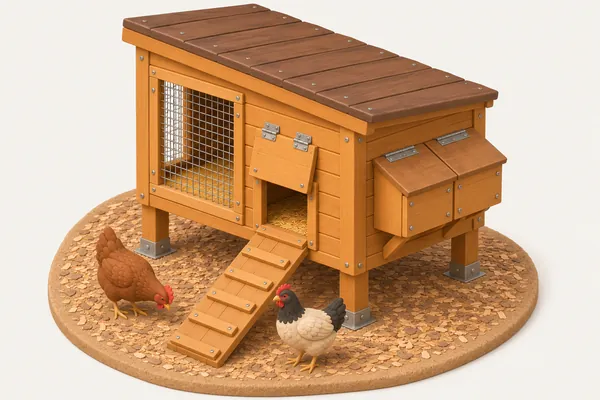 Raised coop
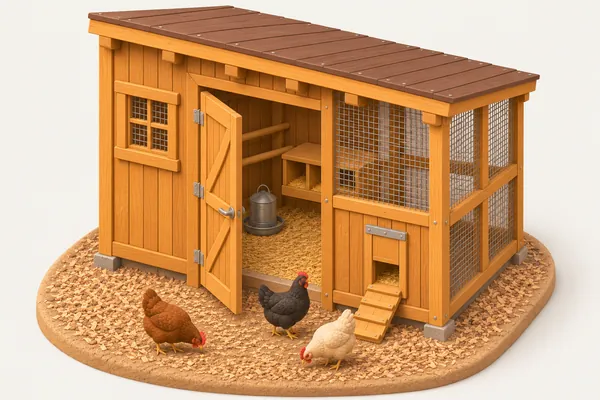 Walk-in coop
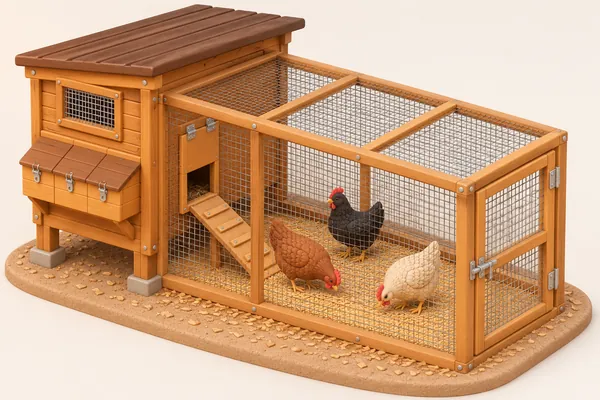 Coop with run
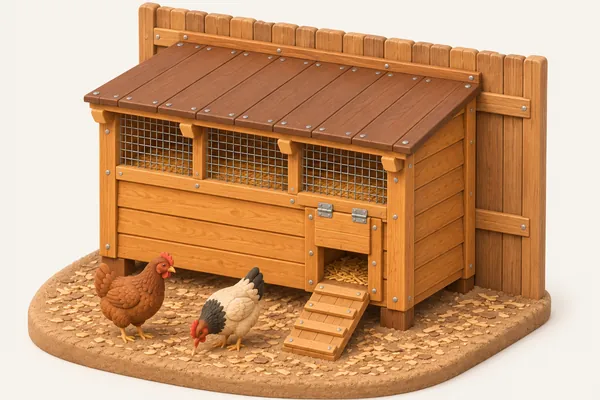 Lean-to coop
How bird size changes the fit
Bantams make better use of this floor: with daily outdoor access, the recommended number is 12, while Penn State's minimum of 1.5 sq ft per bird allows 24. Large breeds bring those counts down to 6 recommended or 12 at that minimum. When any of these birds stay inside all day, the limits are 2 recommended at 10 sq ft each or 3 at the minimum of 8 sq ft each.
Perches and nest access
For the standard flock shown at capacity, the layout calls for 2 roost bars and 2 nest boxes. Place the bars so birds can settle without crowding, and keep the boxes reachable for egg collection. These fittings organize resting and laying areas; the floor still determines how many hens the coop can support.
Making room for a larger flock
If your hens are confined, giving them a run every day changes which space allowance applies, though it does not add indoor floor. For more than the recommended standard flock, choose a coop one size larger or expand the footprint. Extra roosting or nesting space alone cannot replace floor area.
A manageable daily routine
At this size, keep the routine centered on clear access to the roosts and nest boxes. Refill the feeders and water buckets shown in the layout, and collect eggs from the boxes without blocking the hens' route through the door. Scrape both roost bars regularly, then check beneath them for droppings before bedding builds up. The drawing does not specify whether this coop is raised or walk-in, the wall heights, or where the boxes sit, so confirm those details before choosing how to clean and reach inside.
Check your own coop
Enter your exact size and bird type in the planner to see what fits and what is missing.
Check your own coopQuestions
How many standard hens can stay in this coop all day?
For confined hens, the recommended allowance is 10 sq ft each, which gives a limit of 2. Penn State's minimum is 8 sq ft each, allowing 3, but that is the tighter minimum setup.
What run area goes with the standard flock shown here?
Eight standard hens need 80 sq ft of run at the recommended rate. Outdoor room supports daytime activity, while the 24 sq ft coop floor remains the indoor limit.
Could this floor hold more standard hens if they go out daily?
Penn State's minimum of 1.5 sq ft per hen permits 16 with daily run access. The recommended rate supports 8, so consider a coop one size larger if that is your target flock.