
Chicken coop for 6 chickens
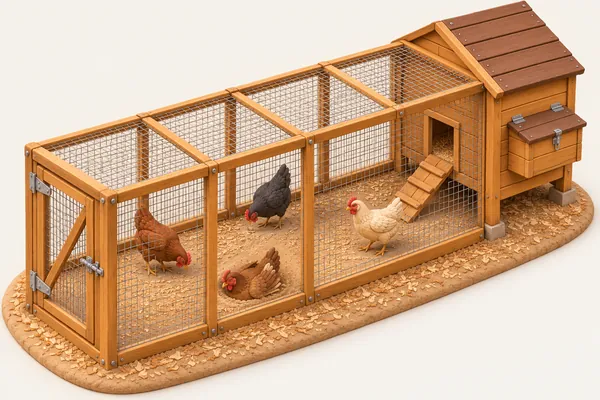
6 standard hens with a daily run: a 4 × 5 ft coop and a 6 × 10 ft run.
 Coop4 × 5 ft
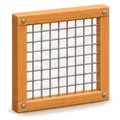 Run6 × 10 ft
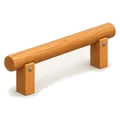 Roost5 ft
 Nest boxes2
Six is the flock the planner opens with, and the 4 × 5 ft coop is the first size with a full 30 in access door instead of a small hatch. That door is the real upgrade over the square 4 × 4 ft: you lean in to clean rather than reach in blind.
Side view: heights of roost, nests and doors
Spec for 6 hens, with sources
| Part | Minimum | Recommended | This plan | Rule |
|---|---|---|---|---|
| Coop floor | 9 sq ft | 18 sq ft | 20 sq ft (4 × 5 ft) | 1.5 sq ft per hen minimum, 3 recommended with a run Sources: Penn State Extension; Oregon State University Extension |
Sources range from 1.5 to 10 sq ft per hen; 8-10 if the hens never go out (Oregon State). | ||||
| Run | 48 sq ft | 60 sq ft | 60 sq ft (6 × 10 ft) | 8-10 sq ft per hen Sources: Penn State Extension; Virginia Cooperative Extension |
| Roost | 36 in | 60 in | 60 in, one bar 24 in high, 14 in from the back wall | 6-10 in per hen, 24 in high, at least 12 in from walls Sources: Penn State Extension; UC Davis School of Veterinary Medicine; Oregon State University Extension; University of Kentucky Cooperative Extension |
| Nest boxes | 2 | 2 | 2 boxes 12 × 12 × 12 in, 24 in high | 1 box per 4-5 hens, 12 × 12 × 12 in, floor at least 18 in and not lower than the roost Sources: Oregon State University Extension; Utah State University Extension; Penn State Extension |
Penn State asks for more: two nests for the first four hens, then one per four more (3 for 6 hens). | ||||
| Feeder | 18 in | 18 in | round feeder 12 in across = 37.7 in of edge | 3 in of feeder edge per hen Sources: Penn State Extension |
| Water | 1 nipple | 1 nipple | bucket with 2 nipples | 1 nipple per 6-8 birds Sources: Penn State Extension |
| Vent | 2 sq ft | 2 sq ft | 2 sq ft strip on the front wall | about 1 sq ft per 10 sq ft of floor; never directly over the roost Sources: Common practice; Penn State Extension |
No extension service gives a vent area; the figure is common practice. Penn State: vents must not open over the perches. | ||||
Other birds, other days
The same 6 hens as bantams or large breeds, going out to a run or staying in. Each cell opens the planner on that case.
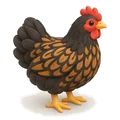 Bantam
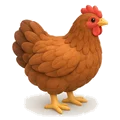 Standard
 Large
What fits in common coop sizes
Standard hens at the recommended space, for the coop sizes around 6 hens.
One bar for six
Five feet of width lets a single 60 in bar carry all six birds at the 10 in each that UC Davis suggests, so there is no second perch to step around when you clean. The two nest boxes sit outside the right wall at the same height as the bar. Oregon State and Utah State are satisfied with two for six hens, while Penn State would hang three.
A morning with six hens
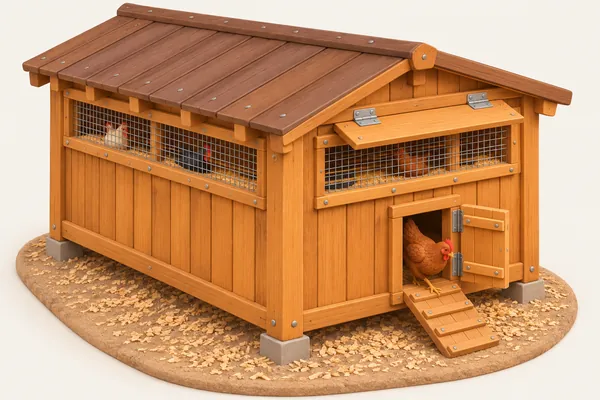
Open the pop door, top up the round feeder and the bucket with its single nipple, check both boxes and look under the perch for anything unusual in the droppings. Fresh bedding goes in through the 30 in door. The vent strip above that door stays open all year; in cold weather the draft that matters is the one across the perch, not the one up high.
Build it
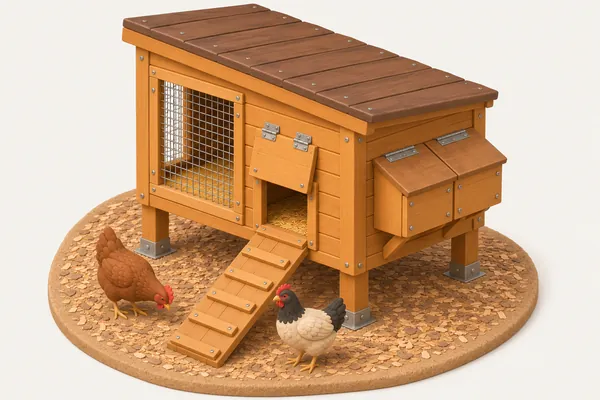
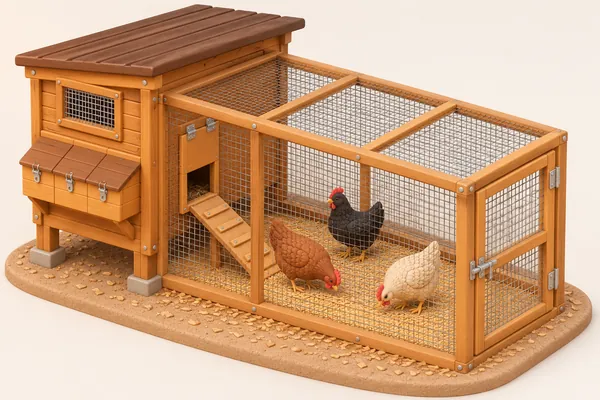
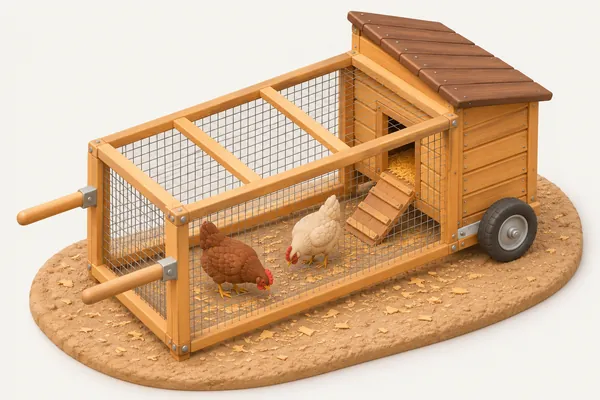
Plans that suit this flock
 Raised coop
 Coop with run
 Chicken tractor
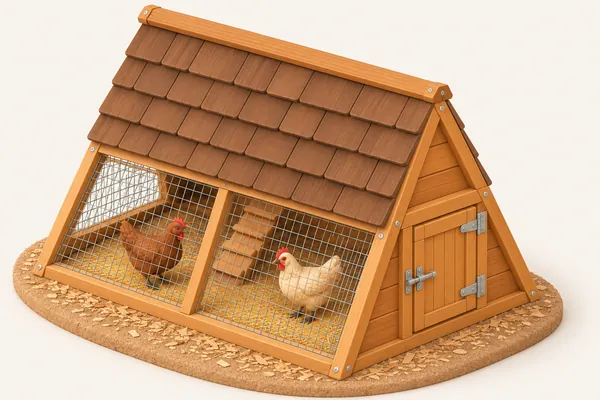 A-frame coop
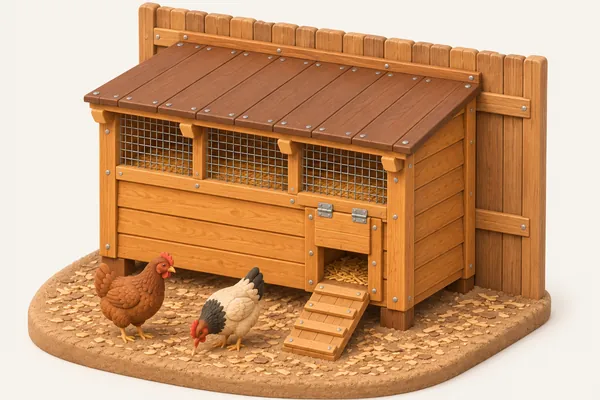 Lean-to coop
Parts of the coop, one by one
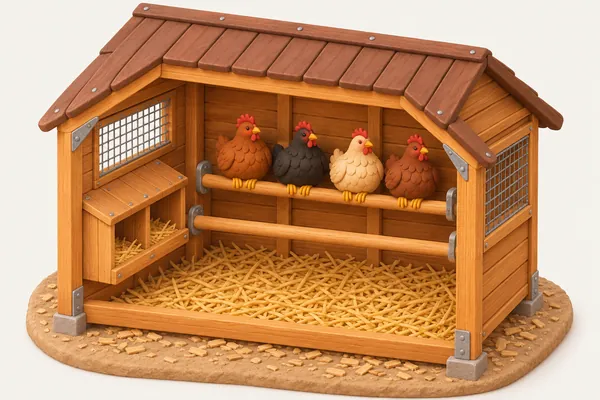 Roosts
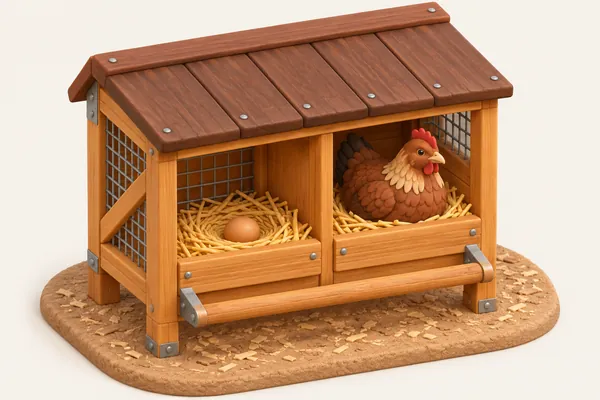 Nest boxes
 Run size
 Ventilation
Questions
Is one drinking nipple enough for six hens?
Yes by Penn State's figure of one nipple for every six to eight birds, so six hens sit right at the limit. A bucket with two nipples costs little more and avoids a queue on hot days.