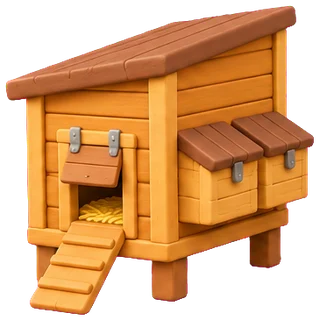
Predator proofing a chicken coop
A 6 × 10 ft run has 32 ft of fence line: 192 sq ft of wall mesh at 6 ft high and 60 sq ft for a covered roof, 252 sq ft of mesh in all, about 2 rolls of hardware cloth.
Mesh round the run
Site view. Mesh goes on every wall of the run and over its top; a skirt lies on or in the ground round the outside.
Fence line
32 ft
Perimeter of the run
Wall mesh
192 sq ft
6 ft high (common practice)
Roof mesh
60 sq ft
A fully covered run
Skirt
None entered
Sources give no width
All mesh
252 sq ft
Rolls
2
36″ × 50 ft rolls (common product size), no allowance for overlaps
The sources used on this site give no width or depth for an apron or buried skirt, and no mesh gauge. This page invents none: set the skirt width yourself, and follow your local extension service for the details.
A common mistake is treating one barrier as enough. A strong run fence will not protect hens if a door gap, loose edge, or uncovered opening remains. Check the coop and run together, including corners and places where materials meet.
The rules and where they come from
Where sources disagree each figure keeps its own row or note; nothing is averaged. Common practice means no extension service publishes the figure.
| Rule | Figure | Source |
|---|---|---|
| Wall mesh height in the calculator | 6 ft, set by youCommon practice, the height the plans use. | Common practice |
| Hardware cloth roll | 36″ wide, 50 ft longA common product size. | Common practice |
| Apron or buried skirt width and depth | no figureThe extension sources used on this site give none, so the calculator takes the width from you and invents none. | No source gives one |
| Mesh gauge and opening | no figureNot given by the sources used here. | No source gives one |
Close every opening
Use hardware cloth over vents and other openings, and fasten it securely to sound framing. Check the edges for gaps, since predators can exploit a loose corner as readily as an uncovered opening. Keep doors fitted closely and confirm that latches hold them shut. Look over the whole structure from outside and inside, where small gaps may be easier to spot against the light.
Secure the run
A run needs a continuous barrier, with the top covered if predators can climb or fly in. Secure the fence where it meets the coop so there is no easy entry at the connection. Pay special attention to corners, gates, and the ground line. Choose durable materials and repair damage promptly; a bent panel or lifted edge can leave an opening even when the rest of the enclosure is sound.
Check before nightfall
Close hens inside the coop at night, and make the routine easy to follow by keeping doors and latches convenient. Before leaving, check that every hen is in and every entry is shut. Inspect barriers regularly for damage, disturbed soil, or loose fasteners. After repairs or changes to the run, check the joins again so a new gap has not opened between the coop, fence, and roof.
Questions
What is the best material for predator proofing a chicken coop?
Sturdy hardware cloth is a practical choice for covering openings and reinforcing exposed areas. Fasten it to solid framing and check that its edges sit tightly against the structure, since a secure material can still fail if it is loose.
Does hardware cloth keep predators out of a chicken run?
It can help when it forms a continuous, firmly attached barrier. Cover the top when predators could enter from above, and check gates, corners, and the connection to the coop for gaps or weak spots.
Should I lock chickens inside the coop at night?
Yes. Shut hens inside at night and use a door that closes securely. Make a final check that every hen is in and the door and other access points are fully closed.
How deep should a predator barrier go underground?
Extension sources give no single number for barrier depth. Use a durable barrier at the ground line, check for digging or disturbed soil, and reinforce vulnerable edges if you find signs of an attempted entry.
Next step
Next in the build: winter coop. Or put the numbers into your own coop in the planner.